


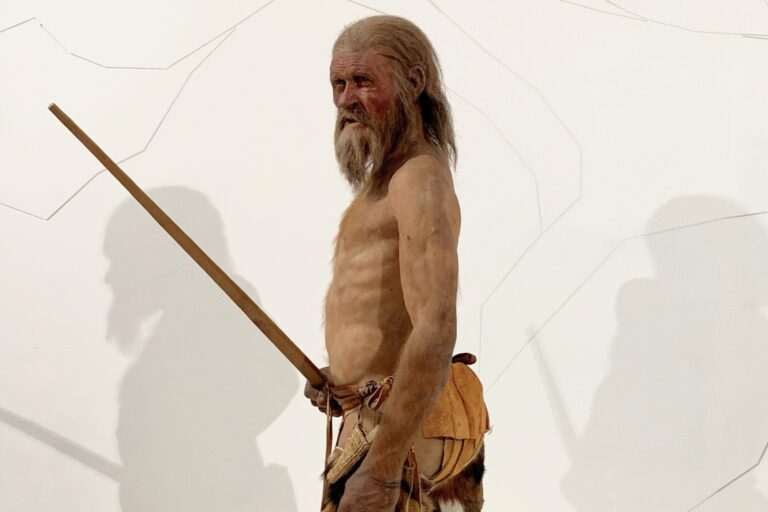
On September 19, 1991, while hiking in the Ötztal Alps on the Austrian-Italian border, German tourists Helmut and Erika Simon stumbled upon a fascinating discovery: the frozen, mummified remains of a middle-aged man, left partially uncovered by melting glacier ice. Believing they had found a modern-day accident victim, the pair notified the authorities, who extracted the body and brought it to the office of the medical examiner in Innsbruck. There, experts quickly determined that the mysterious man was at least 4,000 years old, and the legend of Ötzi the Iceman was born.
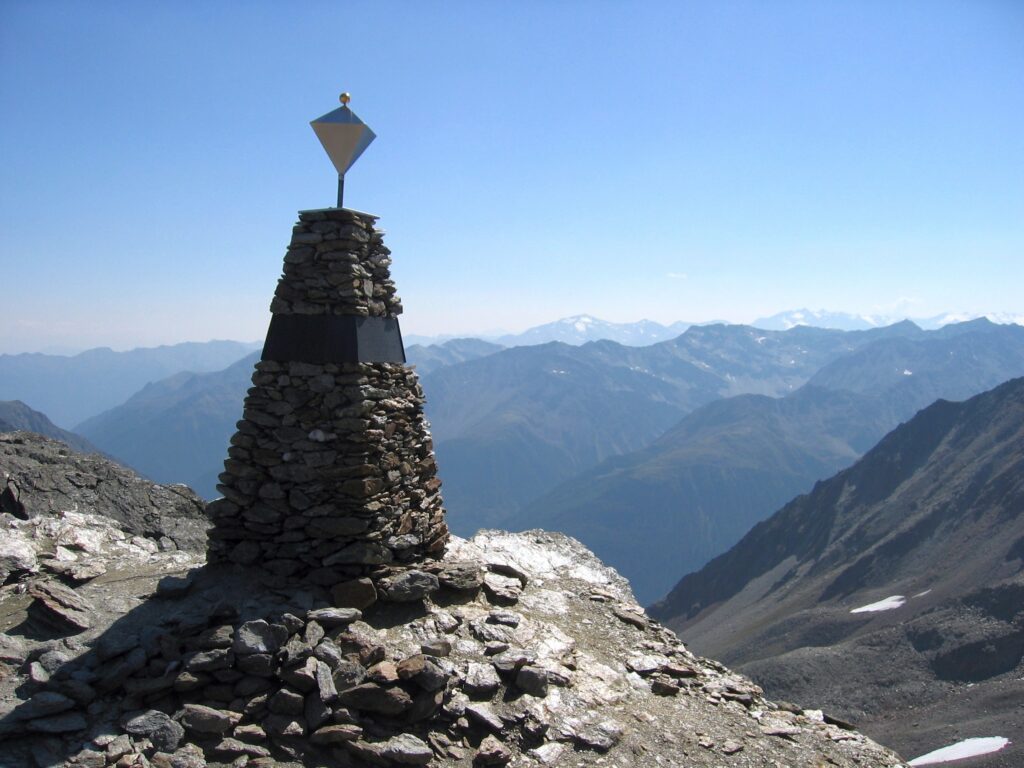
This stone monument marks the spot where Ötzi was discovered after spending 5,000 years frozen in Alpine ice. Source
In the decades that followed, Ötzi – named after the mountain range where he was found – became known the world over as the oldest, best-preserved Chalcolithic (Copper Age) mummy ever recovered. But who was he? How did he die? What was life like when he was alive? Read on to learn more about the mysterious mountain man, whose remains we see in person during our Northern Italy small group tour.
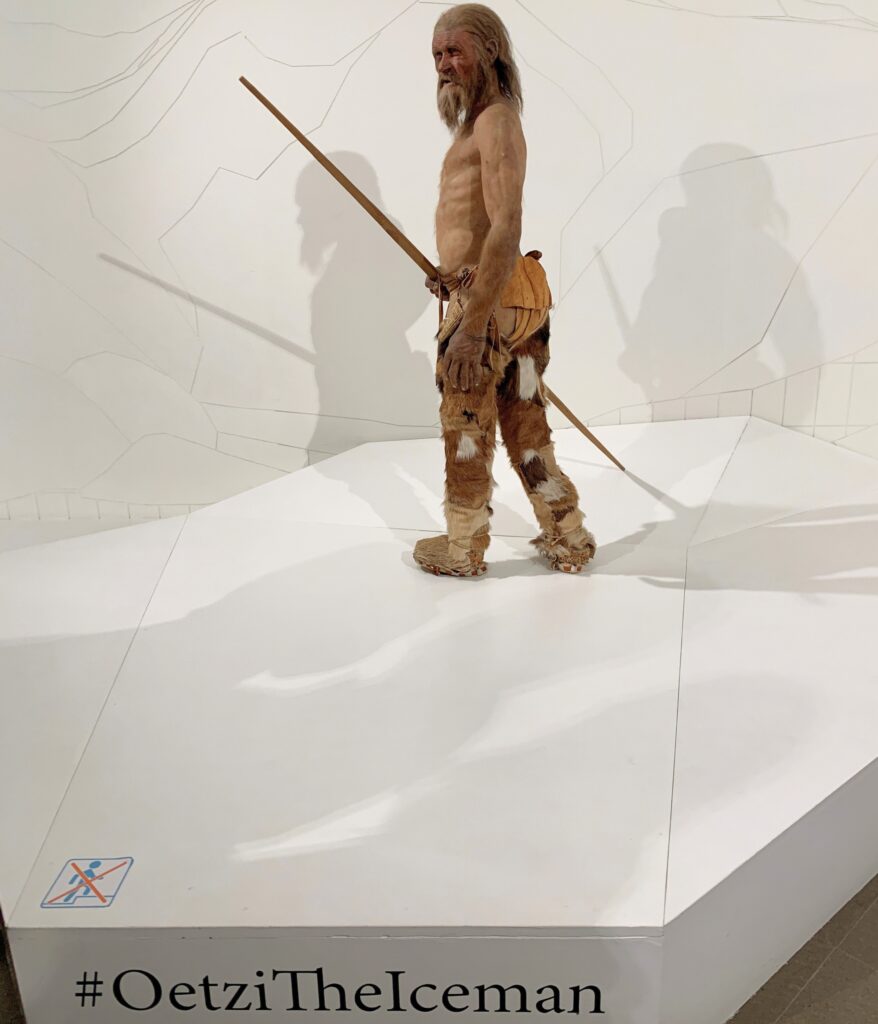
A life-like reconstruction of Ötzi the Iceman on display at the South Tyrol Museum of Archaeology, which we visit on Day 12 of our Northern Italy small group tour.
Ötzi the Iceman’s discovery represents a monumental breakthrough in the study of European prehistory. Unlike King Tutankhamun and other famous artificially preserved Egyptian mummies, Ötzi was frozen in a block of ice, which perfectly preserved his remains for over 5,000 years. Additionally, Ötzi was wearing clothing made from various animal hides at the time of his death, and over 400 tools and artifacts – including two birch-bark containers, a longbow, deerskin quiver, arrows, flint dagger, and a rare copper-bladed axe – were found scattered on the ground around his body.
As scientists analyzed his remains, a clearer picture began to form of who Ötzi the Iceman was. Born sometime between 3300 and 3275 BCE, Ötzi was approximately 45 years old when he died. Experts believe he met a violent end, as his body showed evidence of blunt force trauma to the head, defensive cuts on his hands, and a fatal arrow wound in his left shoulder. Isotopic analysis indicates that he was born in or near the Isarco Valley in South Tyrol, never straying far from his birthplace, and his stomach contents show that his final meal consisted of dried ibex meat, red deer meat, fat, and einkorn wheat.
A few key factors played an outsized role in the Iceman being so well-preserved. First, thanks to the high altitude, cold temperatures, and dry winds in his final resting place, Ötzi’s remains were dehydrated and freeze-dried immediately after he succumbed to his injuries. Then, his body was buried under a thick layer of ice and snow, effectively sealing him in a “time capsule” that protected him from oxygen, bacteria, and scavengers.
This preservation process ensured that his skin, tissue, internal organs, and even his red blood cells were in remarkable condition when he was extracted from the ice in 1991. However, Ötzi is arguably best known for his dozens of ancient tattoos.
Experts have identified 61 tattoos – the oldest known tattoos on record – adorning Ötzi’s remarkably preserved skin. Consisting mostly of simple line, dot, and cross designs on his ankles, knees, wrists, and lower back, Ötzi’s body art has long been a major source of speculation.
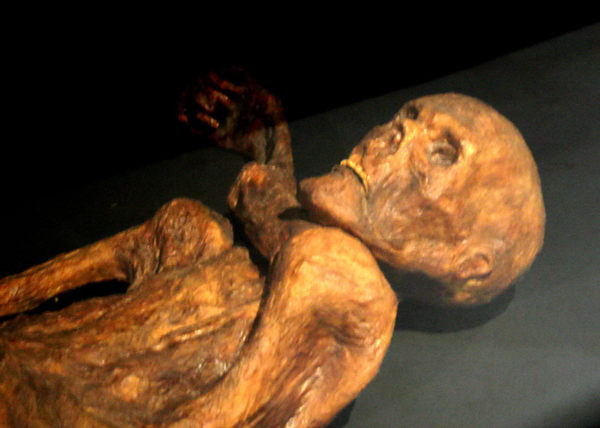
Housed at the Verdon Gorge Prehistory Museum in Quinson, France, this reconstruction of Ötzi the Iceman has clearly visible tattoos on his limbs and torso. Source
Most experts now believe that his tattoos were therapeutic rather than decorative – perhaps an early form of acupuncture – as they predominantly appear on parts of his body that showed signs of arthritic degeneration. However, in 2015, a new cluster of tattoos was discovered on Ötzi’s chest where there were no signs of existing injuries, raising more questions as to the nature of these intentional body markings.
Today, Ötzi the Iceman reigns as the star attraction at the South Tyrol Museum of Archaeology, where guests on our Northern Italy small group tour have the chance to “meet” him for themselves and learn about his fascinating life through exhibits featuring the actual artifacts found with him and recreations of Ötzi himself.
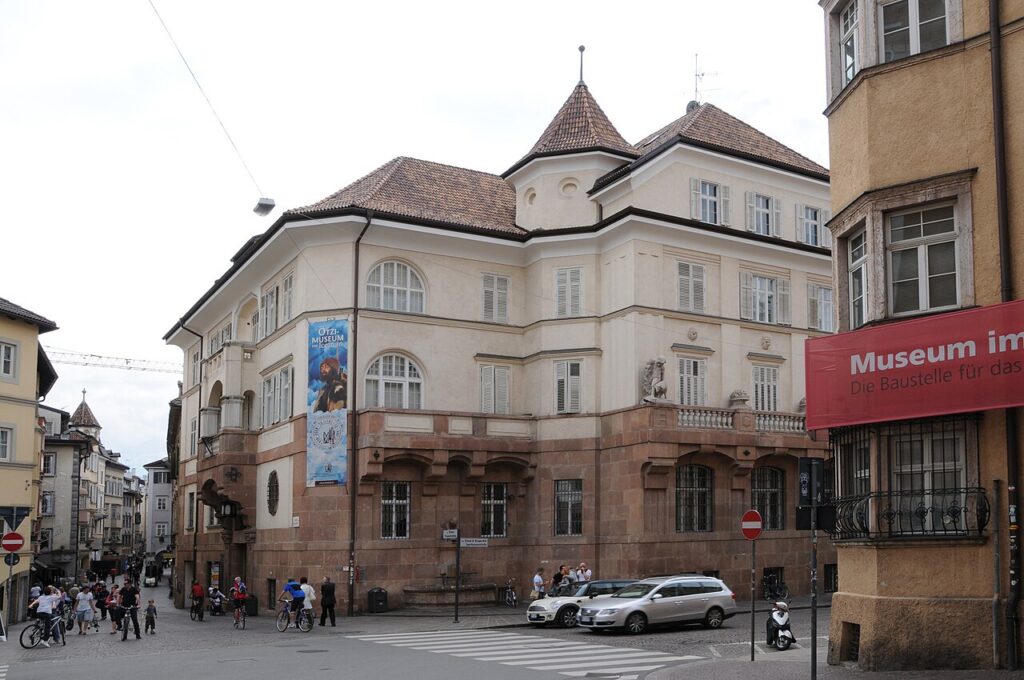
South Tyrol Museum of Archaeology – modern-day home of Ötzi the Iceman. Source
Click here to learn more about this tour. And when you’re ready to reserve your spot, simply submit an online reservation request or call us at 1-888-370-6765 and one of our Travel Counselors would be happy to assist you.
Share your great adventures with us on social media. Tag your pictures with #myodyssey and they may be featured on our website!


By using this website you are agreeing to our Cookie Policy.
