


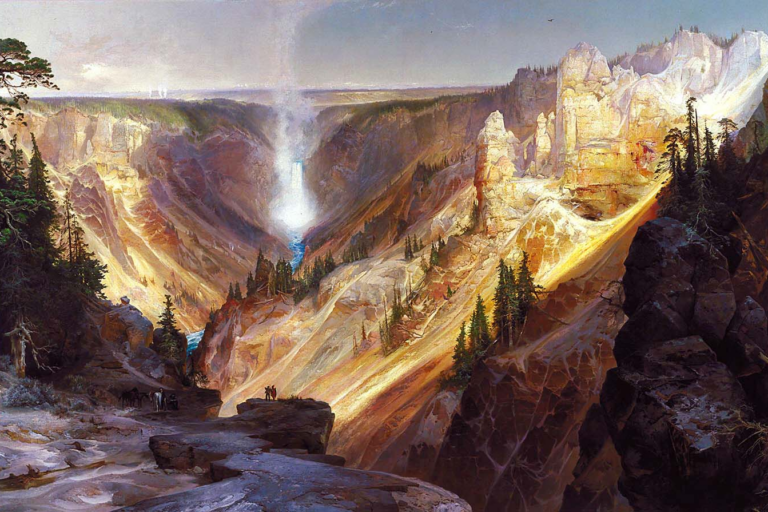
Our national parks – they protect the United States’ greatest natural wonders, acting as a living gallery of our country’s most prized possessions. From the mighty Yellowstone to remote Denali and the immense Grand Canyon to the snowcapped Rockies, U.S. national parks are, as writer Wallace Stegner said, “the best idea we ever had,” ensuring America’s natural beauty is accessible to everyone and preserved in perpetuity. Read on to learn about the founding of Yellowstone, the world’s first national park – and the surprising role that a traveling artist played in its creation..
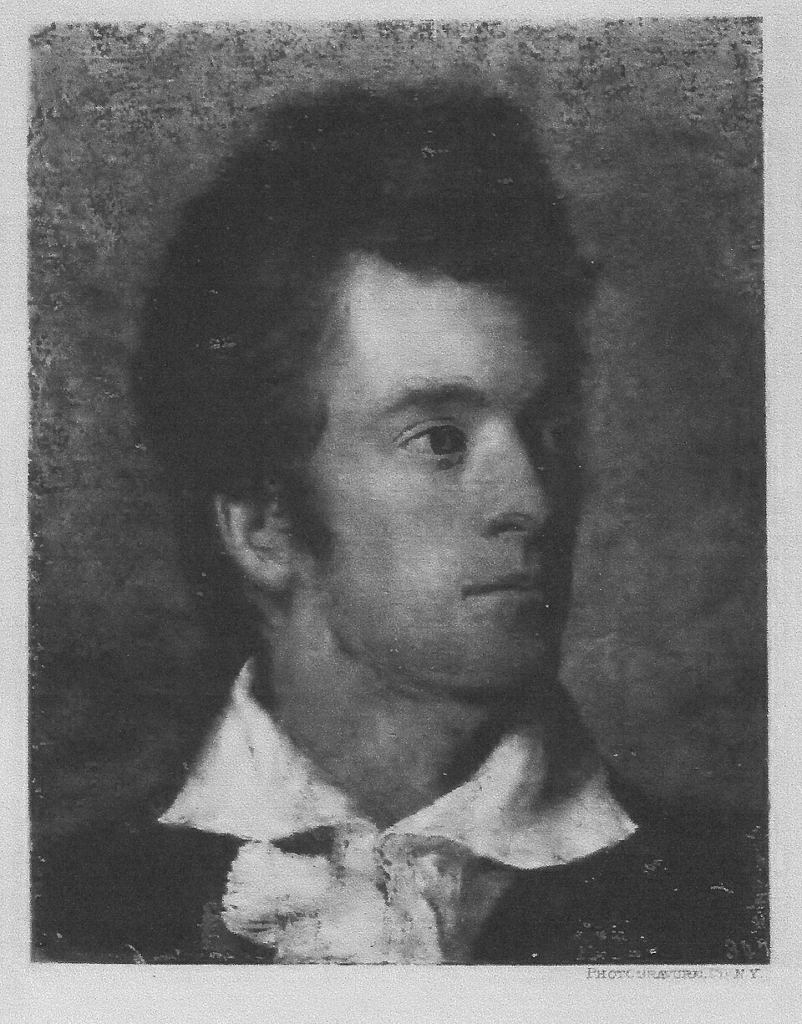
Self-portrait by George Catlin, who is credited with first proposing the idea of establishing national parks
An Idea is Born
During the Age of Discovery, the United States’ natural beauty invited travelers, artists, and writers to explore and share with the world its many wonders. However, in the early 1800s, perceptions of “America the Beautiful” shifted as the Industrial Revolution swept through the nation. Mass production became the focus; opportunists purchased and razed miles of land to fuel their factories, grow their produce, and provide materials to build new towns. The wonder associated with the Age of Discovery was lost and instead, land was seen only as a resource.
This resulted in a counter-movement (later named American Romanticism) led by writers and artists who saw nature as something to explore and enjoy, rather than to challenge and conquer. Their works helped shift public opinion of the vast swaths of then-untouched land throughout the country. Artists like Thomas Moran and Albert Bierdstadt depicted America’s natural scenery as heavenly, using diffuse golden light in their paintings to create dreamlike landscapes. Meanwhile, writers like Ralph Waldo Emerson and Henry David Thoreau philosophized about the importance of nature to the human spirit.
But it was artist George Catlin who first proposed the concept of a national park. While traveling northwest to the Great Plains, he was so impacted by the beauty of the wilderness – and by the Native Americans living there – that in 1832 he proposed creating a government policy to establish “a nation’s park, containing man and beast, in all the wild and freshness of their nature’s beauty!” Though his proposal was deemed impractical, his ideas – and the ideals of American Romanticists – set the stage for what followed.
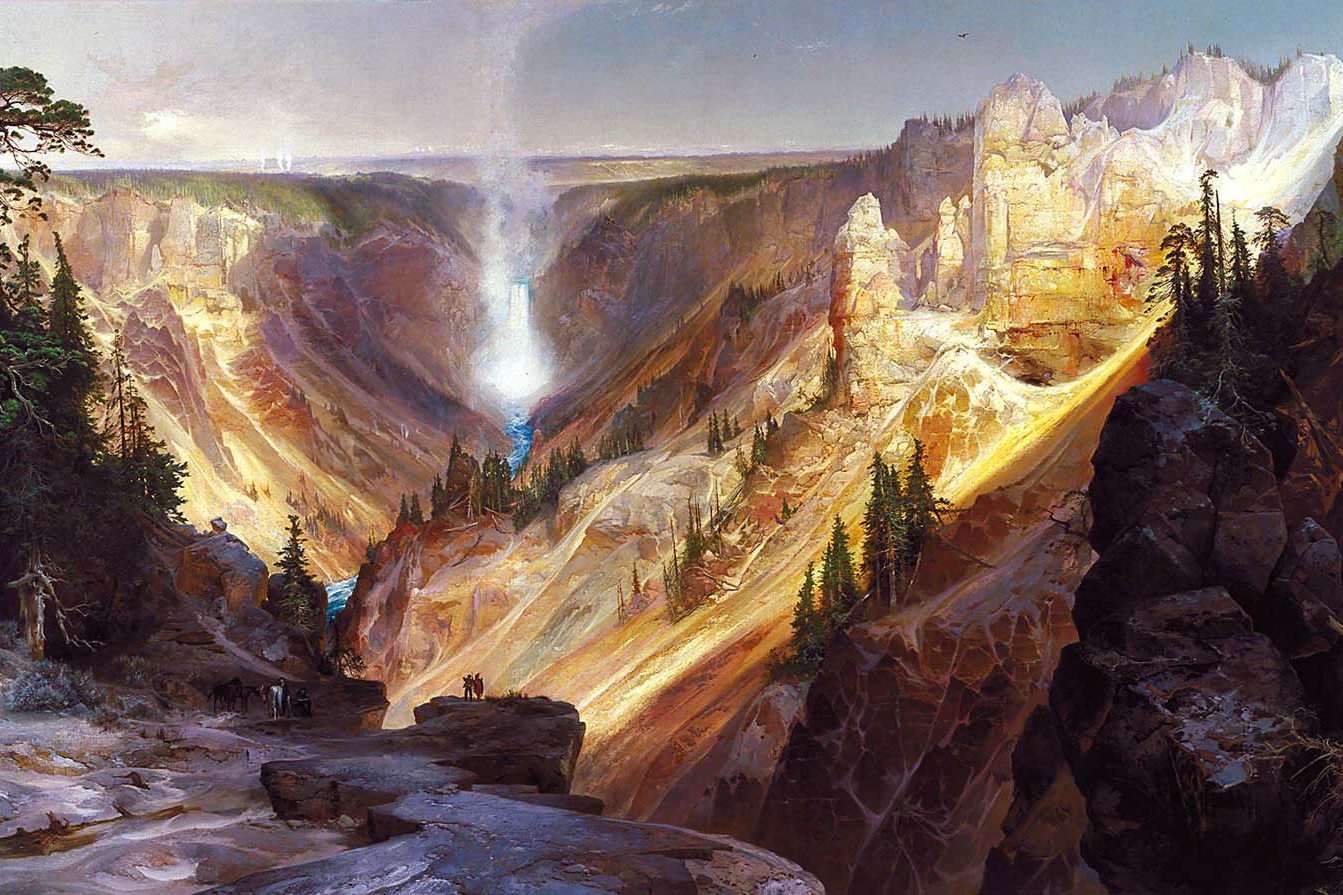
The Grand Canyon of the Yellowstone (1872) by Thomas Moran
Yellowstone: The First National Park
Detailed, intentional expeditions to the Yellowstone area began in 1869, wherein explorers rhapsodized about landscapes of “wild romantic scenery” that “surpass[ed] all others in the known world.” They described wilderness so striking that many magazines refused to publish their writings, believing they were too exaggerated. However, their accounts inspired more expeditions, and quickly the area became a media sensation.
“The geysers display an exuberance of strange motion and energy admirably calculated to shake up, and surprise, and frighten the dullest observer out of soul-wasting apathy, and make him begin to grow and live again.” — John Muir
These accounts convinced the government to remove the land from public auction and, on March 1, 1872, President Ulysses S. Grant officially deemed Yellowstone as protected parkland, making it the first national park in the U.S. – and the world.
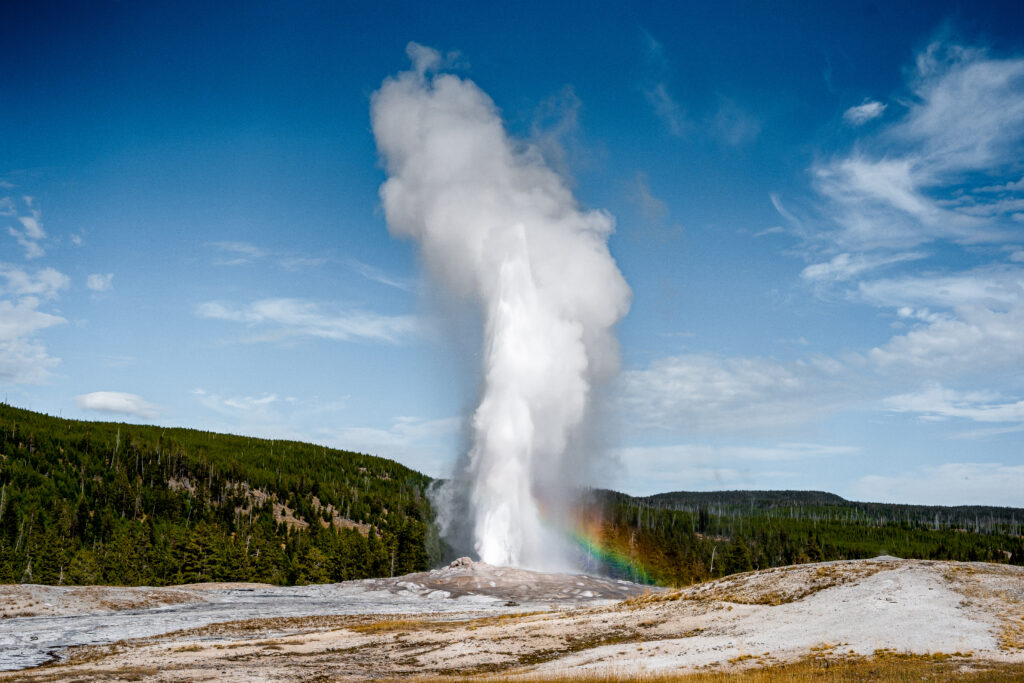
Old Faithful Geyser, Yellowstone National Park
The U.S. National Park System
Since Yellowstone’s establishment, the U.S. has created 62 more national parks throughout the United States and its territories. This is largely due to President Theodore Roosevelt’s Antiquities Act of 1906, which allowed presidents to proclaim landmarks, structures, and other objects of historic or scientific interest as federally protected national monuments.
With this power, Roosevelt alone doubled the number of existing national parks during his presidency, and designated 18 national monuments (including the Grand Canyon), 150 national forests, 51 bird reserves, and four game reserves. Today, the national park system remains a shining example of American national pride and allows travelers to freely experience our country’s natural wonders.
You can explore Yellowstone, as well as the Grand Teton and Badlands national parks, on our The American West small group tour; or, witness others such as Denali and Kenai Fjords national parks; Glacier National Park; and Bryce Canyon, Zion, and Grand Canyon national parks on Alaska’s Untamed Wilderness, Canadian Rockies Explorer, and National Parks of the Southwest, respectively.
Share your great adventures with us on social media. Tag your pictures with #myodyssey and they may be featured on our website!


By using this website you are agreeing to our Cookie Policy.
