Sun-drenched Lisbon, Portugal’s capital, has enchanted travelers for centuries. And what’s not to love? Situated at the mouth of the Tagus River where it empties into the Atlantic, the city boasts stunning views, sandy beaches, and rows of aesthetic pastel-colored buildings topped with red-orange tile roofs. When you factor in its delicious cuisine, walkable streets, pleasant climate, rich culture, and deep history, it becomes clear why Lisbon is one of the most popular destinations in Europe.
Below, we’ve curated a guide featuring expert advice on how to get the most out of your trip to Lisbon. Read on to learn about the city’s best neighborhoods, meals, activities, attractions, and more. And if you don’t have plans to visit but are inspired to, consider our Portugal tours.
Table of Contents
- The Basics: Language, Currency, Climate, & Safety
- Getting Around
- Food & Cuisine
- Restaurant & Dining Etiquette
- 8 Areas to Visit
- 10 Famous Attractions
- Useful Information
- Useful Apps
- Useful Websites
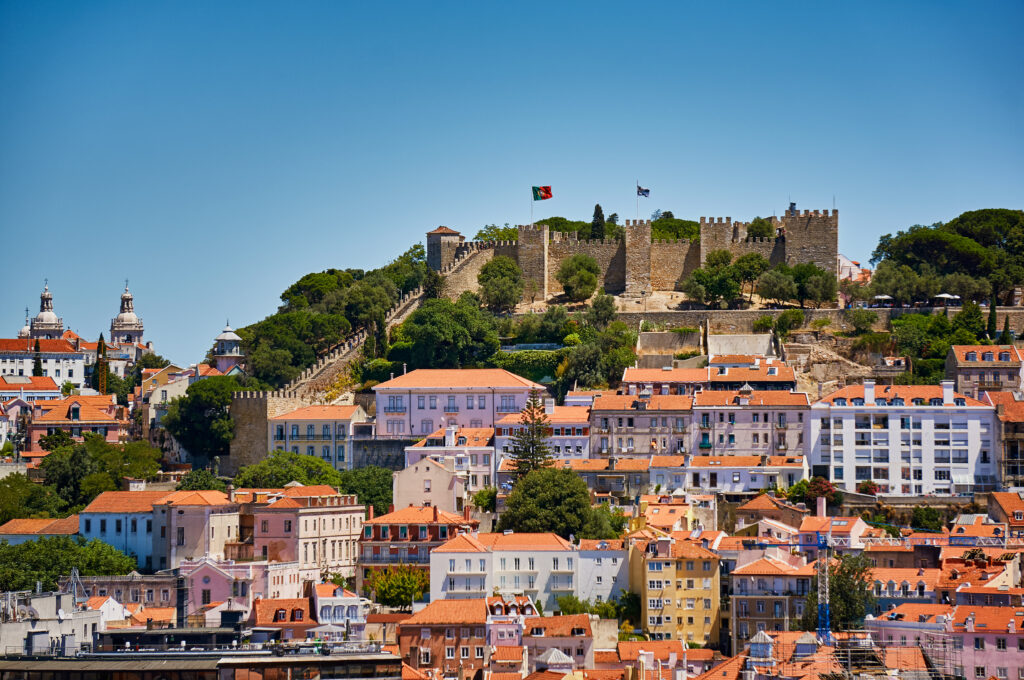
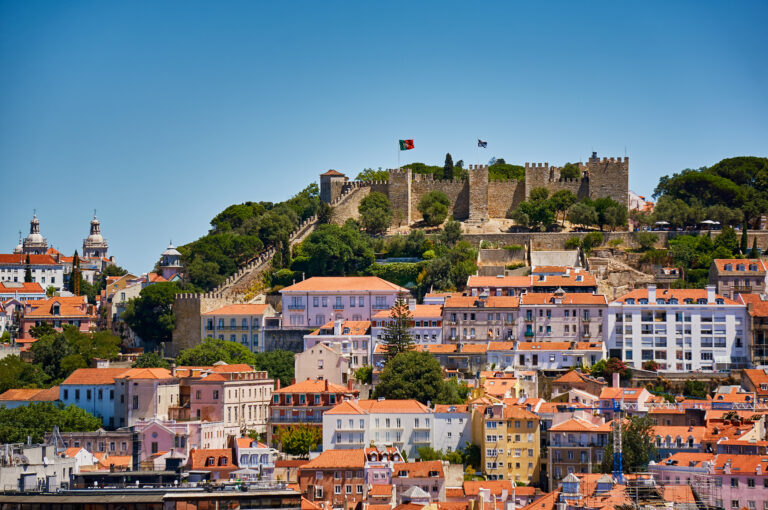
11th-century Castelo de São Jorge overlooking Lisbon
The Basics
- Language – The official language is Portuguese, but English is commonly spoken as well, especially in locations heavily frequented by tourists. However, locals will appreciate visitors who learn basic Portuguese words and phrases.
- Currency – The unit of currency in Portugal is the euro (abbreviated € or EUR). Click here to calculate the current exchange rate. Major credit cards are widely accepted in Lisbon, as are mobile payment methods (Apple Pay, Google Pay, etc.)
- Climate – Lisbon’s mild spring and fall weather creates very pleasant traveling conditions. Temperature highs average in the 60s and 70s, with lows in the 50s. Rain during this time period usually occurs in short but heavy bursts, often in the afternoon, averaging about four to nine rainy days per month. Visit AccuWeather for more climate information.
- Safety – Lisbon ranks as one of Europe’s safest capitals. Travelers should, however, be on the lookout for pickpocketing and scams, especially in areas frequented by tourists. Be vigilant towards petty crime and practice common-sense safety measures to protect your belongings while on-the-go: wear bags in front of your body, use a money belt, avoid brightly colored clothes that mark you as a tourist, etc. Also be wary of people appearing to sell trinkets or forcibly grabbing your attention at busy tourist areas; this is a common technique used by scammers and thieves to distract you while an accomplice steals your wallet.
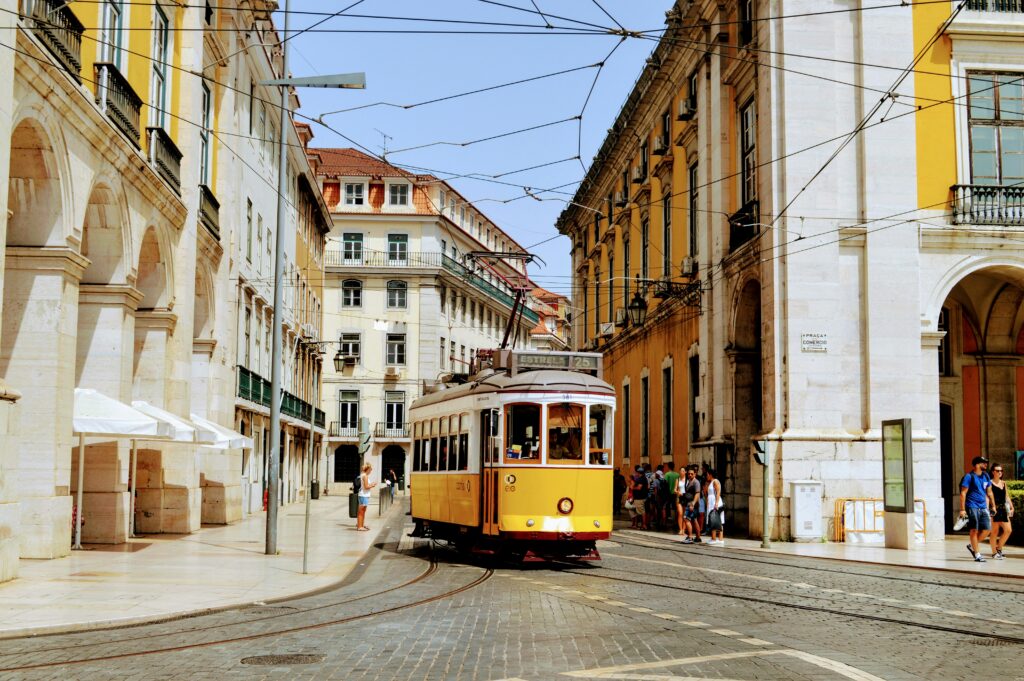
Lisbon’s iconic yellow Tram 28
Getting Around
Lisbon is extremely walkable; however, as the “City of Seven Hills,” steep inclines are common. Thankfully, Lisbon boasts an extensive and affordable public transit system (called Metro de Lisboa) featuring a network of subways, buses, trams, trains, and ferries.
Lisbon’s trams are somewhat iconic, especially the 28 route, which journeys through some of Lisbon’s most popular districts (including Alfama, Baixa, Estrela, and Graça) and still uses original 1930s-style trams with original wood interiors, brass details, and more.
The easiest way to pay fares is to obtain a rechargeable Navegante card at any ticket machine, train station, or metro booth. Alternatively, you can purchase a 24-hour pass that gives you universal access to the transit system for a day. Though some transit methods (such as subways and buses) may accept credit cards and mobile payment methods, be aware that older vehicles (such as most trams) do not.
For more information on the Lisbon public transit system, click here.
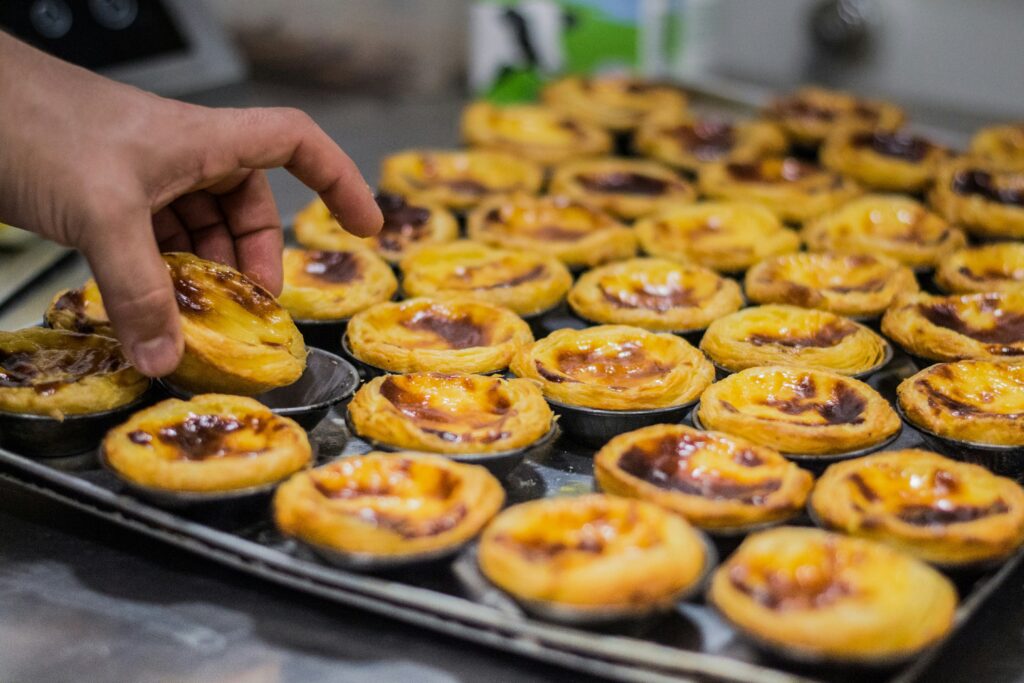
Egg custard tart (pastel de nata), a popular pastry in Lisbon and throughout Portugal
Food & Cuisine
Lisbon’s cuisine largely revolves around its lucrative fishing industry, making seafood (especially fish) a primary protein for many traditional dishes. Lisbon’s dining scene also features a variety of international cuisines, such as Goan, Brazilian, Chinese, Italian, and Lebanese.
Below are some foods you may encounter while in Lisbon.
- Pastel de nata – Perhaps one of Portugal’s most well-known foods, this egg custard tart has a crisp, flaky crust and a rich, sweet filling, caramelized at the top and often sprinkled with powdered sugar.
- Bacalhau – Portuguese codfish, called bacalhau, has remained a staple of Lisbon cuisine since at least the 15th century, famously boasting more ways to be prepared than there are days in the year. You’ll see bacalhau in many dishes, such as pasteis de bacalhau (cod fishcakes) and bacalhau à Brás (shredded cod with onions and potatoes).
- Chouriço – Called “chorizo” in the U.S., this spicy Portuguese pork sausage is another common protein in Lisbon meals.
- Bifanas – A sandwich featuring marinated pork slices in a crusty bread roll. Spice variations depend on location, but in Lisbon, the flavor profile is typically mild.
- Arroz de marisco – Don’t confuse this dish with neighboring Spain’s paella; the Portuguese consider their soupier seafood rice as its own distinct dish, despite their similar ingredients.
- Sardinhas assadas – Most restaurants will have their own version of sardinhas assadas (grilled sardines); that’s how beloved these salty little fish are in Lisbon.
- Bitoque – This common dish consists of grilled or fried steak topped with a runny fried egg, along with rice, french fries, and a small salad.
- Linguado grelhado – Sole grilled in either butter or olive oil (called linguado grelhado no azeite), often paired with boiled vegetables, tomato rice (arroz de tomate), or a salad.
- Coffee – Lisbon has a thriving coffee culture, and there’s many ways to order your daily cup of joe. If you’re a coffee lover, it’s a good idea to research the proper Portuguese terms for your favorite orders. Espresso is probably the most common; in Portugal, it’s known as bica. An American-style coffee is called an abatanado.
Restaurant & Dining Etiquette
Dining etiquette in Lisbon is similar to that of the rest of Europe. Below are some must-know restaurant rules for visitors to Lisbon:
- Meals tend to be late and lengthy. Lunch is often taken between 1:00 p.m. and 3:00 p.m., and dinner service at restaurants often doesn’t begin until 7:00 p.m. or 8:00 p.m. Lunch and dinner typically last around two hours each, sometimes more.
- Lunch is considered the “main” meal of the day. Expect three main courses and a leisurely atmosphere.
- Be on time for restaurant reservations or risk losing your table.
- Seat yourself if there is no host or signage. Unless you have a reservation or there is a sign indicating otherwise, you can usually seat yourself upon arrival at a casual restaurant. If you are unsure, you can always ask.
- Finger foods for the table are usually not free. Bread, olives, cheeses, and the like may be served shortly after you are seated, but unlike in the U.S., these are not complimentary; if you eat them, you will be charged a couvert (cover charge). However, do know the couvert is typically nominal and considered part of the restaurant experience.
- Most waitstaff will not voluntarily check on your table. European cultures often consider it rude for waitstaff to "interrupt" your meal. If you need to get the attention of a waiter, simply catch their eye and wave or raise your hand and they will make their way over to you.
- Waitstaff will not bring you the bill unprompted. You must get the attention of a waiter, call them over, and ask for it directly. Most of the time, they will bring you a paper bill and disappear to give you time to wrap up your meal and get your payment together. You may have to get their attention again for them to come take your payment. If you are in a hurry, holding your credit card up while asking may prompt the waiter to bring the payment machine along with the bill.
- Tipping isn’t expected, but it is appreciated. A small tip of a few euros for good service is common at restaurants. Note that it is usually not possible to tip with a credit card, so keep small change on hand.
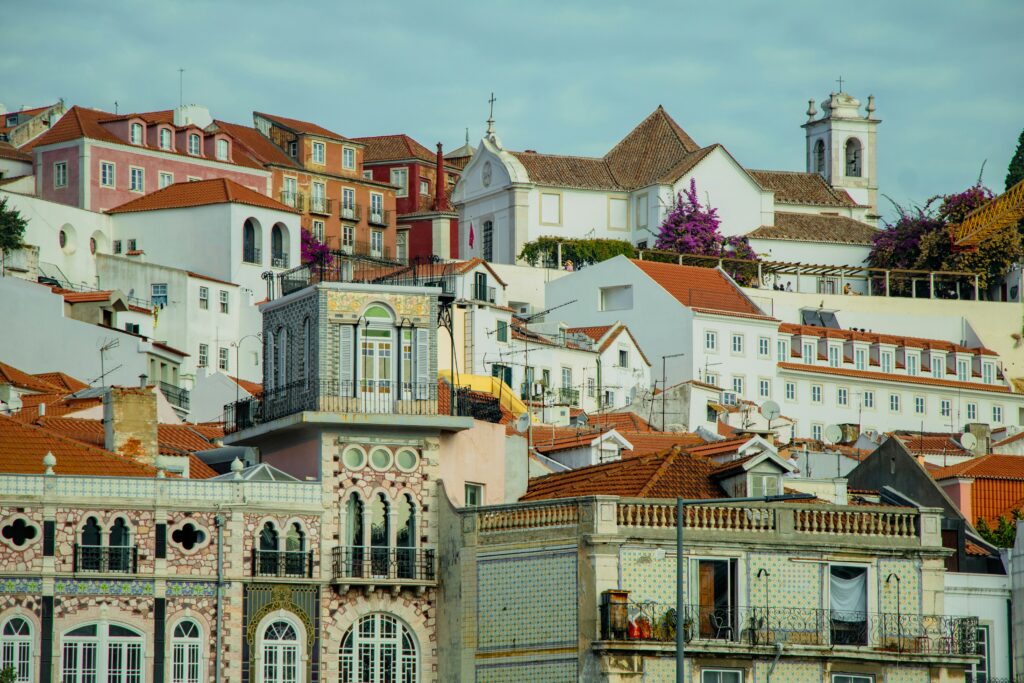
Alfama district
8 Areas to Visit
Tokyo is unique in the sense that it is a true metropolis: a conurbation made up of 23 distinct wards, as well as other cities, towns, and villages. Keep this in mind when exploring the areas listed below.
- Alfama – Winding streets, cobblestone paths, narrow alleyways, and historic buildings make up Alfama, the oldest neighborhood in Lisbon. Here, you can visit landmarks such as Castelo de São Jorge and the Sé (Lisbon’s oldest cathedral) while listening to traditional Fado music.
- Baixa – Located on a flat plane between Alfama and Chiado, central Baixa was destroyed after an earthquake in 1755 and then reconstructed into the grid pattern that is now unique to this district. It contains many highlights: Rossio Square, Rua Augusta, Figueira Square, and more.
- Chiado – This is Lisbon’s shopping and theater district, characterized by avenues (including Rua Garrett) lined with high-end boutiques and restaurants.
- Bairro Alto – As Chiado’s bohemian neighbor, Bairro Alto contrasts the elegance of Chiado with a more alternative, artsy vibe. Plenty of local restaurants and small street bars welcome late-night explorers.
- Belém – This district lies on the coast, about a 20-minute tram ride from central Lisbon. Grab a pastel de nata from the famous Pastéis de Belém bakery and sit by the river to relax before exploring Belém Tower and Monsteiro dos Jerónimos.
- Príncipe Real – Stylish and sophisticated, Príncipe Real boasts luxury and designer shopping along its wide, tree-lined avenues, especially Avenida da Liberdade.
- Alcântara – The waterfront district of Alcântara was once industrial, but in the past few decades, former factories and warehouses have been transformed into some of the city’s trendiest restaurants, bars, and clubs. Plus, its riverside location lends itself to lovely views.
- Graça – The primary appeal to Graça is its elevation. Several viewpoints are scattered around this hilltop neighborhood, offering excellent views of the city.
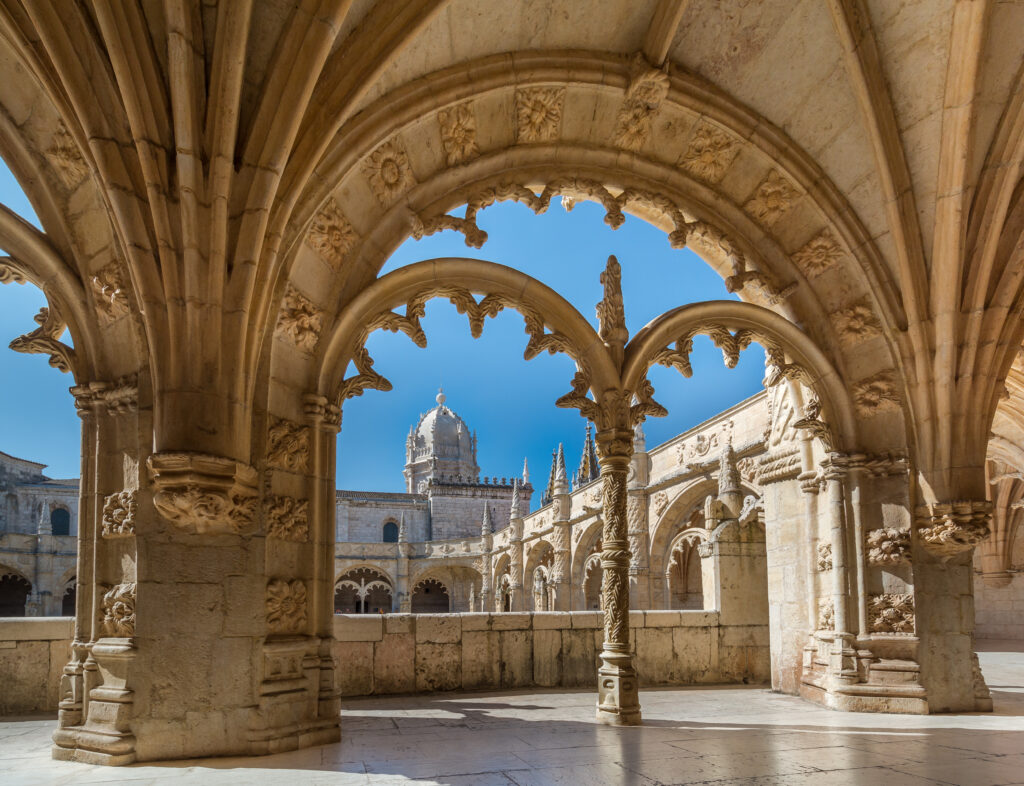
Monsteiro dos Jerónimos
10 Famous Attractions
There’s no way to summarize all the sites, events, activities, and attractions available in Tokyo. We could easily create specialized “top 10” lists for almost any interest. So, we recommend you cater to your wants and needs when planning your trip. Below, you can find a list of some of the more famous attractions in Tokyo – along with the ward they are located in – to give you an idea of what’s available.
- Monsteiro dos Jerónimos – An architectural wonder and UNESCO World Heritage Site, 16th-century Monsteiro dos Jerónimos features a cloister with intricately detailed archways and columns.
- Belém Tower – This UNESCO World Heritage Site is one of Lisbon’s most recognizable buildings. Built on a small island off the shore of the Tagus River, the tower stands as a symbol of 16th-century Lisbon’s maritime power.
- Castelo de São Jorge – The hill on which Castelo de São Jorge stands has hosted fortifications as far back as the 1st century BCE, but the current structure was built in the 11th century CE. The Moorish castle looms over central Lisbon, making it an extremely recognizable landmark.
- Tram 28 – Climbing steep hills and navigating narrow streets, the 28 route provides a leisurely way to see the historic neighborhoods of Alfama, Baixa, Chiado, and more while riding in a bright yellow, 1930s-style tram. Just keep in mind that riding the entire route takes about an hour, and that since this attraction is extremely popular for tourists, wait times are almost always quite long.
- Praça do Comércio (or Terreiro do Paço) – This iconic square is one of the largest in Europe. Surrounded on three sides by symmetrical 18th-century buildings and directly facing the harbor, the square sits close to many popular attractions, making it an easy and worthwhile stop.
- Pont 25 de Abril – Lisbon’s red-orange bridge may remind you of a certain “Golden Gate” in the U.S. … Pont 25 de Abril is Europe’s longest suspension bridge, designed by the same company who built San Francisco’s iconic bridge. It’s worth visiting for the views; you can also book a tour that takes you to its 262-foot-tall lookout.
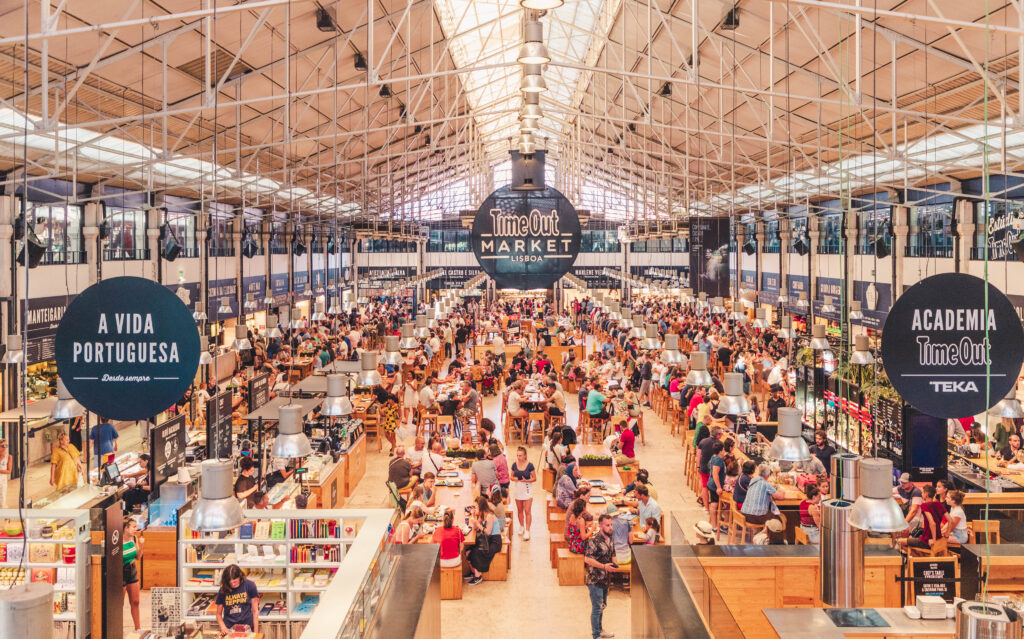
- Time Out Market – The popular Time Out Market has become a must-visit for foodies exploring Lisbon, as it doubles as both a farmer’s market and a food court. From 6:00 a.m. to 2:00 p.m., stalls selling fresh fish, fruit, and vegetables fill the 19th-century Mercado da Ribeira building; then, beginning at 10:00 a.m., its 26 restaurants and eight bars open for business, offering both international and local specialty meals, tapas, and drinks.
- Livraria Bertrand – Did you know that the world’s oldest operating bookstore lives in Lisbon? Established in 1732, Livraria Bertrand (Bertrand Bookstore) is rich with history, featuring floor-to-ceiling bookshelves and rooms themed after famous authors. A book lover’s paradise!
- Oceanário de Lisboa – Lisbon’s aquarium is considered one of the best in the world and is one of the most visited places in the entire country. Home to over 8,000 animals, Oceanário de Lisboa takes you on an immersive journey through several marine habitats situated around a huge central aquarium.
- Miradouro da Nossa Senhora do Monte – Many agree that Miradouro da Nossa Senhora do Monte is the best viewpoint in the city; it’s Lisbon’s highest and offers panoramic views of the historic districts and of Castelo de São Jorge.
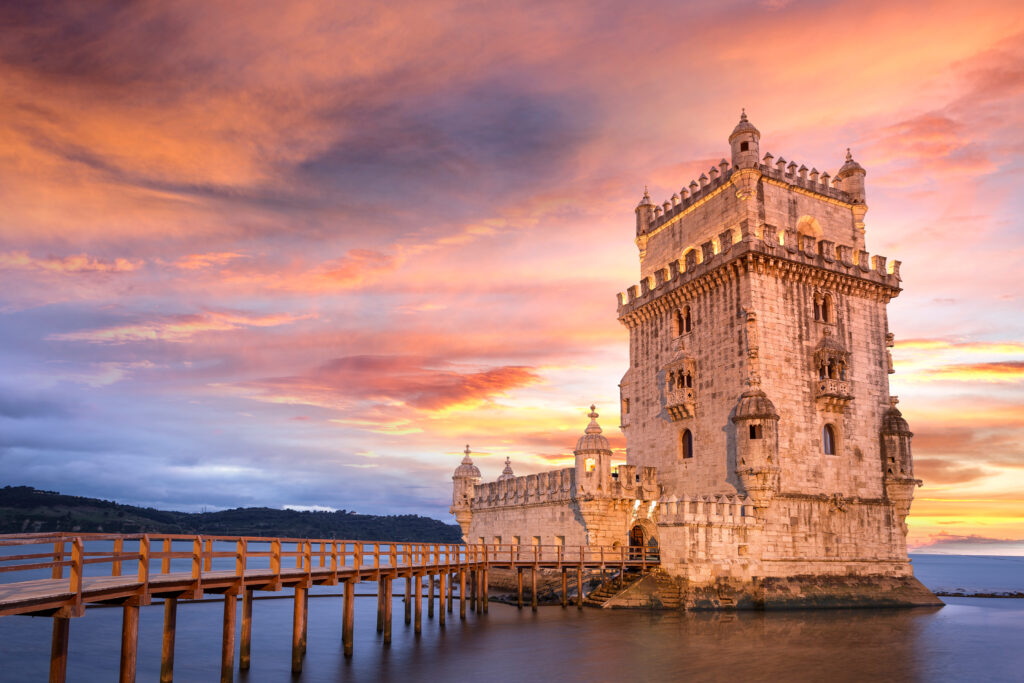
Belém Tower
Useful Tips & Information
- Wear comfortable, broken-in walking shoes with good grip. Lisbon streets are known to be steep and slippery, especially if it’s rainy.
- Utilize public transportation. Don’t wear yourself out too fast by trying to conquer all of Lisbon’s hills at once. Utilize buses, trams, and subways to conserve your energy.
- Learn basic Portuguese words and phrases. As in most places, locals will appreciate your effort to learn their language. After all, assuming everyone speaks English by default can be seen as insensitive. At the least, it’s a good idea to learn how to say, “Hello, do you speak English?” in Portuguese.
- Don’t speak Spanish. The Portuguese are known to dislike when foreigners mistake Spanish for Portuguese or vice-versa.
- Don’t rush. In general, Portuguese culture tends to be slower than many Americans are used to. Meals and waiting lines in particular can be especially lengthy, and the attitude towards punctuality is rather lax. (Do, however, be on time for any reservations you’ve made.)
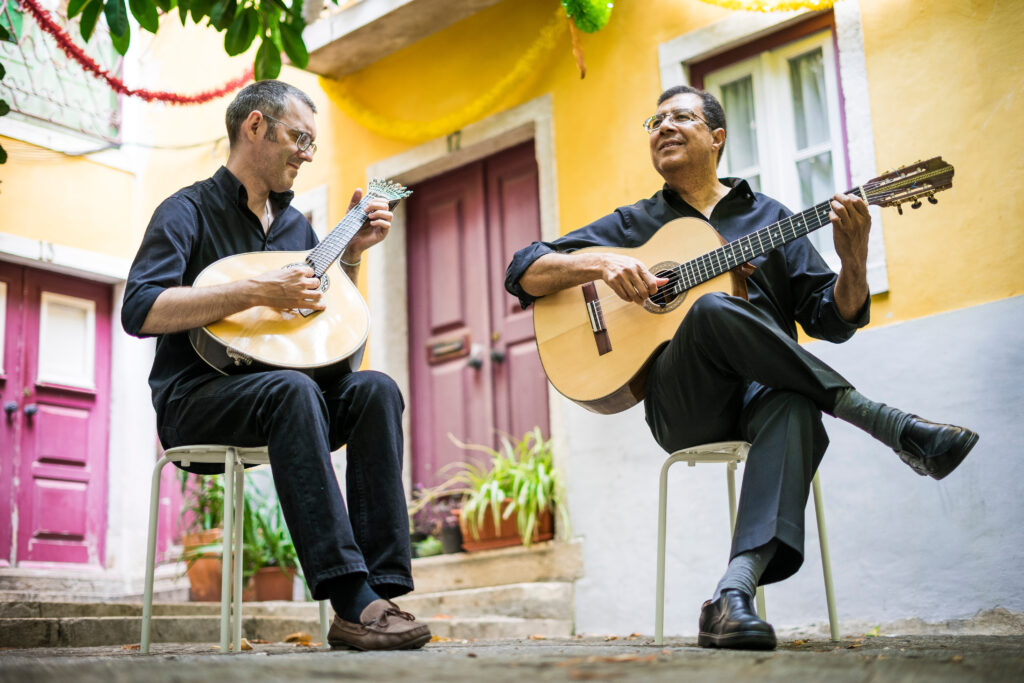
Guitarists performing traditional Fado music
Useful Apps
Google Translate – Instantly translate text, speech, and even images in over 100 languages.
Google Lens – An image recognition tool that can translate text in real time; just point your smartphone camera at signs, menus, or any other text to see the English translation.
Google Maps – With Google Maps, you can get real-time info on traffic and public transportation, and also read reviews of restaurants, stores, attractions, and more.
Lisbon Subway Map – Provides maps for the Lisbon Metro.
Lisbon Metro Guide & Planner – Offers route planning for public transit in Lisbon. It can provide info on routes, fares, and more.
Duolingo – A free language learning app featuring an option to customize your lessons to teach you useful words and phrases for travel.
GetYourGuide – Easily book travel experiences and purchase tickets for thousands of tours, day trips, activities, events, and more.
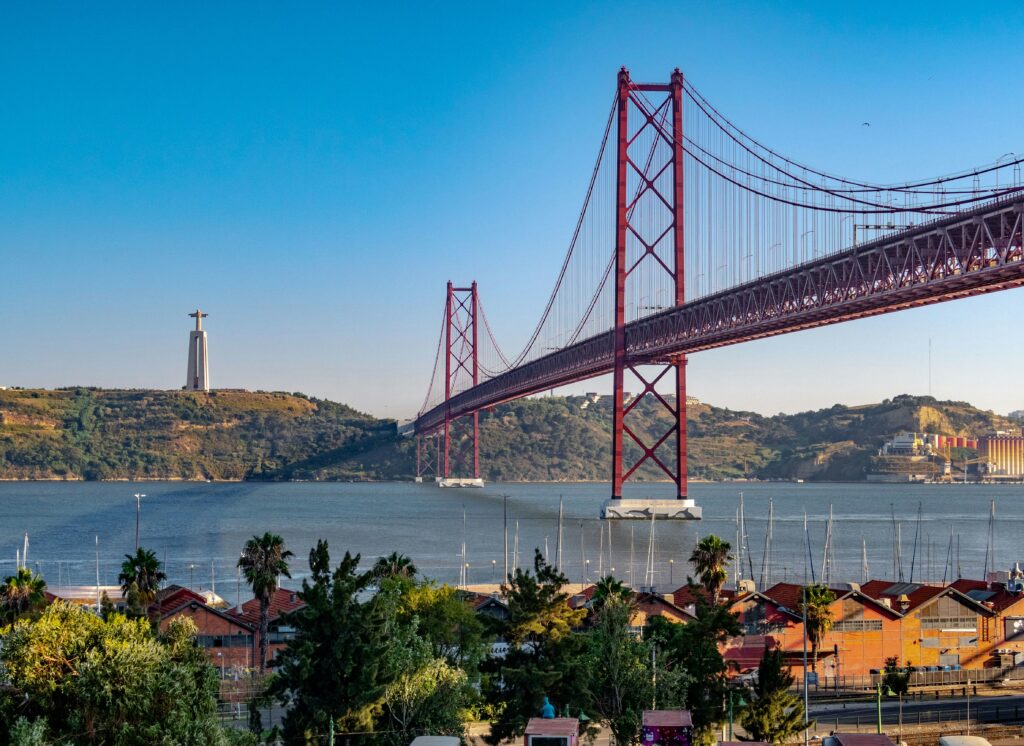
Ponte 25 de Abril
Useful Websites
www.lisbonportugaltourism.com
www.visitlisboa.com/en
www.golisbon.com
lisbonlisboaportugal.com





.jpg)