


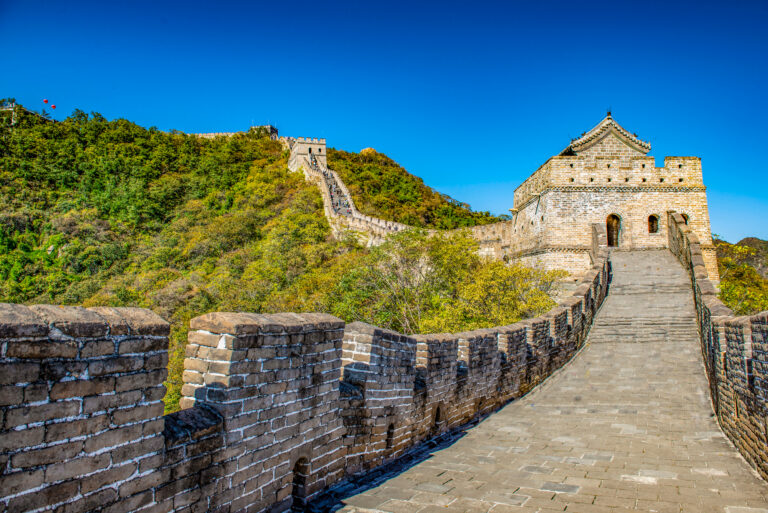
The most common misconception about the Great Wall of China is that it was imagined, designed, and constructed as a single, 13,000-mile-long defensive barrier stretching across China’s northern border to protect the Empire from tribes of nomadic invaders. In reality, it actually began as a vast collection of standalone defensive structures constructed by ancient warring city-states to defend against attacks from the north – and each other. In fact, the Great Wall of China didn’t start to resemble the structure it is today until the 14th century, over 1,000 years after the first defenses were built.
The true, epic story of the Great Wall is one of invasions and counterattacks, rival kingdoms and unified empires, political ambition and human ingenuity – all culminating in the largest manmade structure ever built. Read on to learn more about the iconic landmark’s fascinating origin story and how it has evolved over the years to become the Great Wall we all know today.
TOUR THE GREAT WALL: Exploring China
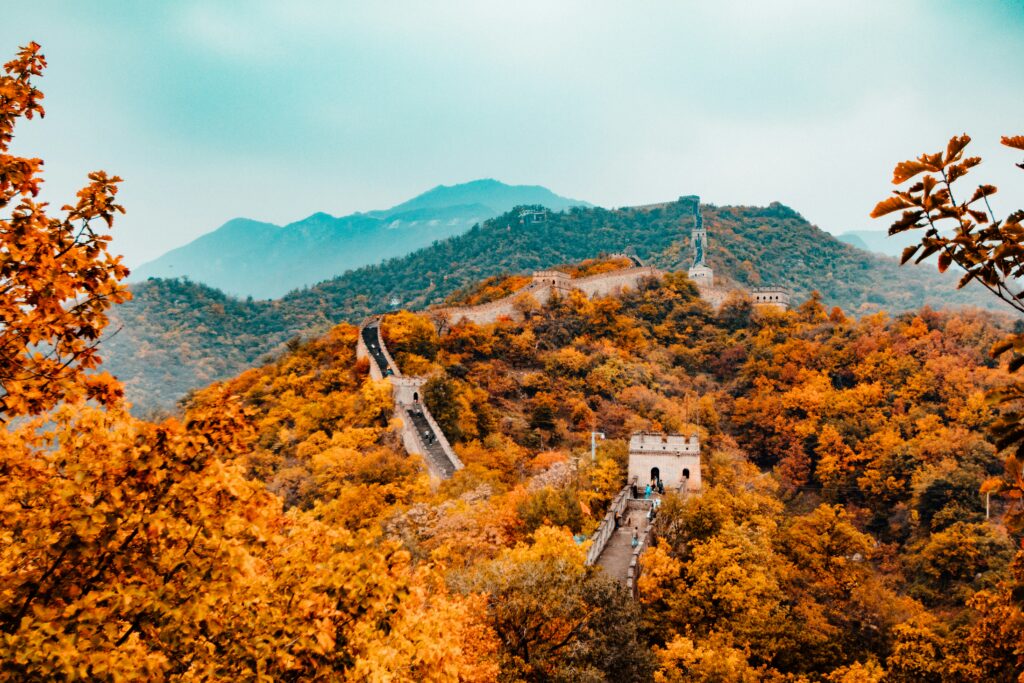
Before the first worker laid the first brick in the first section of wall, there was no Chinese Empire, but rather a collection of scattered kingdoms and states. While these fiefdoms were regularly forced to repel invasions from the north, they also spent a good deal of time fighting one another, typically over resources, territory, and political power.
The year 475 BCE marked the beginning of the Warring States period, which, as its name would suggest, saw increased fighting between the disparate Chinese states. Over two centuries of brutal warfare, military reform, and political consolidation followed, and as the fighting intensified, individual kingdoms started building defensive structures out of packed earth – defensive structures that eventually evolved into the Great Wall of China.
The Warring States period culminated in 221 BCE when a king named Qin Shi Huang established the Qin Dynasty, united all of China into one single empire, and named himself Emperor. In one of his first major actions as Emperor, Qin Shi Huang ordered the individual defensive structures originally built by the warring states to be connected into one defensive barrier to protect this new territory.
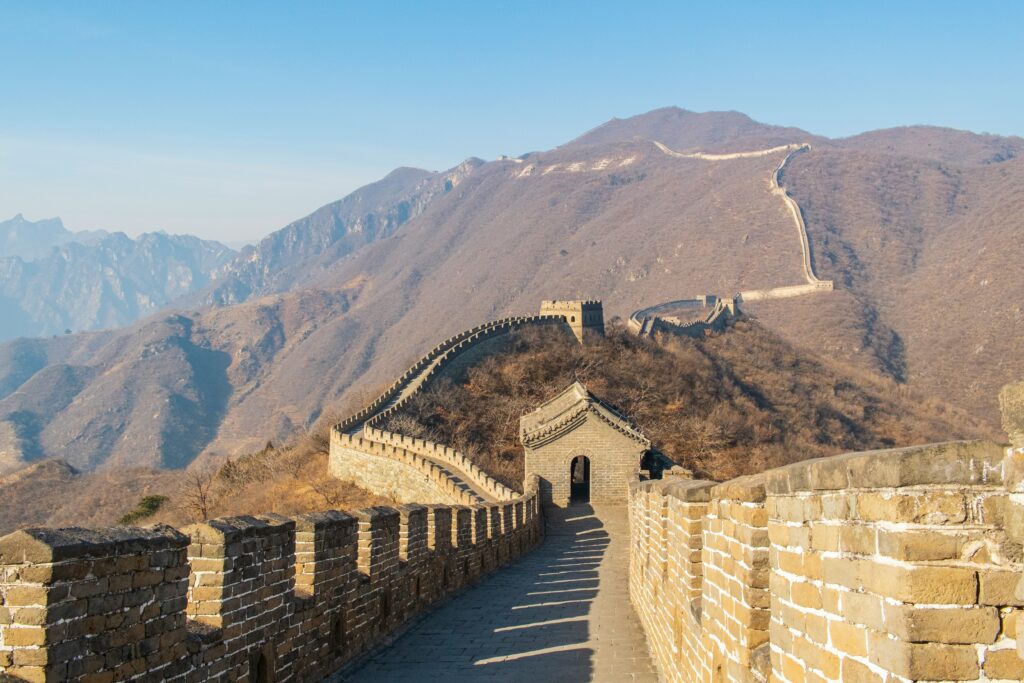
Despite Qin Shi Huang’s victory, the Qin Dynasty didn’t last long, collapsing just 15 years after it was established. The Han Dynasty came next, founded by Liu Bang, who named himself Emperor Gaozu of Han. Like his predecessor, Emperor Gaozu of Han also dramatically built up defenses on the empire’s northern frontier, including the Wall. However, while originally utilized as a strictly defensive structure, the Wall now also served as a way to support military outposts, enforce borders, and protect trade routes along Asia’s crucial Silk Road. During this era, beacon towers were added, making it possible for soldiers to quickly and easily send messages or warnings to each other using smoke, fire, drums, or flags.
The 1,100 years that followed saw a period of shifting power and priorities in the Chinese Empire. Dynasties rose and fell, and work on the Wall continued in fits and starts. Some dynasties performed repairs or expanded certain sections of the Wall, while others neglected it entirely. China still faced challenges from the North – including from Genghis Khan, who successfully breached the wall when he invaded Northern China in 1211 – but rulers during this period only repaired or added to the Wall when they deemed it politically or strategically necessary to do so.
But the Empire’s apathy toward the Wall was about to change.
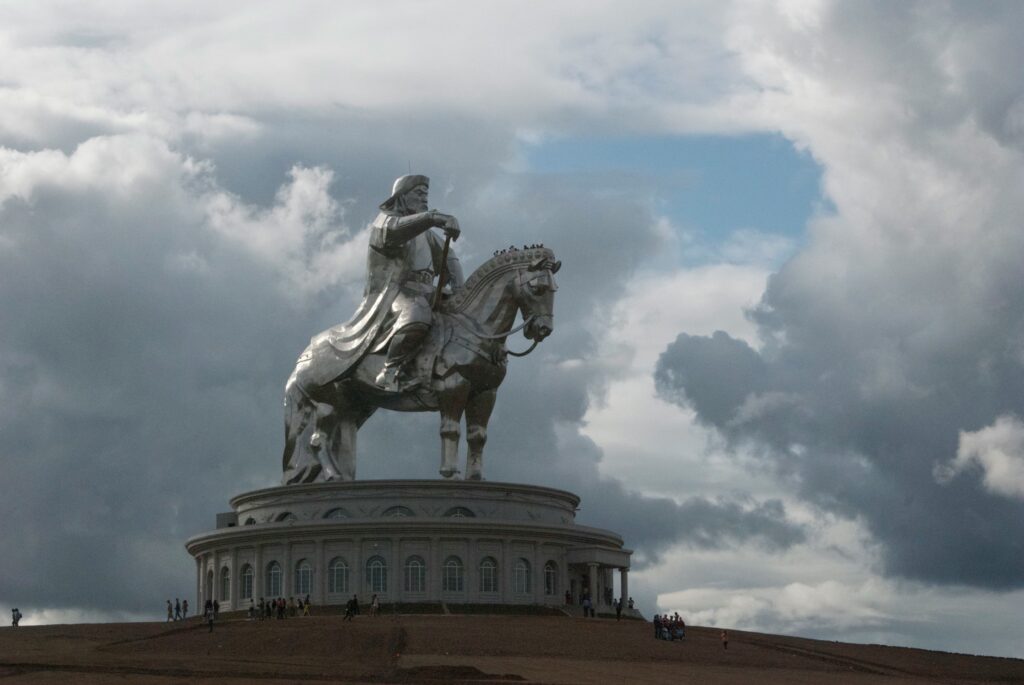
Statue of Genghis Khan, the most famous invader to breach the Great Wall
The Great Wall of China finally started to come into its own when the Ming Dynasty rose to power in 1368. After overthrowing the Mongol-led Yuan Dynasty (but failing to conquer Mongolia), the Mings still faced the threat of invasion from the North. However, instead of relying exclusively on a standing army to defend his borders, the Hongwu Emperor – founder and ruler of the Ming Dynasty – opted instead to invest heavily in the Wall.
This is when the Great Wall of China attained the iconic look we all know today. Workers encased the packed-earth walls in heavy brick and stone, and added enhancements like watchtowers, fortresses, barracks, and beacon towers. Many of the Wall’s most famous sections near Beijing – namely Badaling, Jinshanling, and Mutianyu, the latter of which we visit on our Exploring China tour – date to this era, and the Wall stretched to thousands of miles in length under the Mings.
The rise of the Qing Dynasty in 1644, however, signaled the beginning of the end for the Great Wall of China as a functional defensive barricade. Since the Empire was first united under the Qin Dynasty in 221 BCE, China’s borders had spent almost 2,000 years in flux, and by the 17th century, the northern border now stretched far beyond the Wall’s defensive barrier. Maintenance largely ceased during this time, as the Wall had lost virtually all of its military importance.
With the abdication of Puyi, China’s final emperor, the Qing Dynasty fell – but the Great Wall lived on.
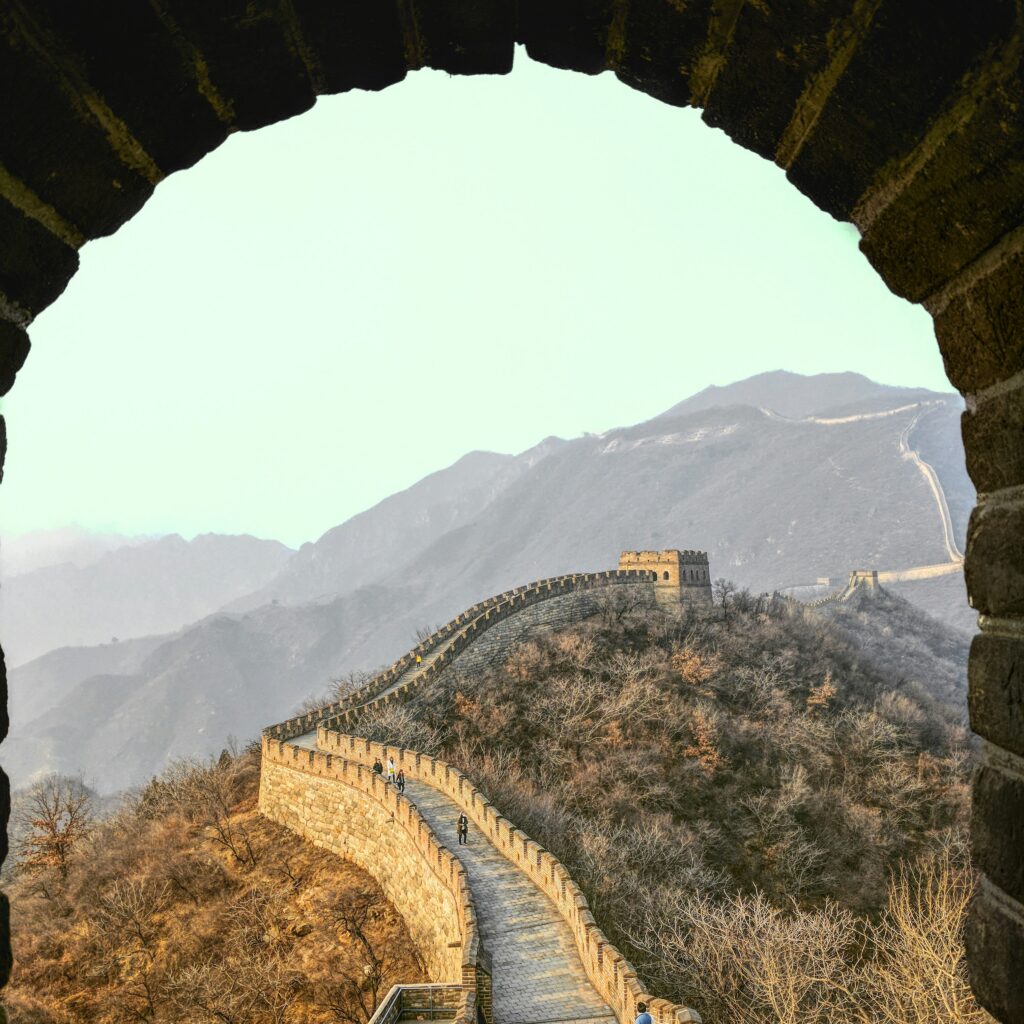
Over time, the Great Wall of China came to be viewed less as a military fortification and more as a symbol of China’s cultural identity. After China opened its borders to international travel in the late 19th century, curious adventurers began to seek out the Great Wall. Restoration efforts began in fits and starts over the next century, and modern tourism to the Wall officially took off when the restored Badaling section opened in 1970.
Due to the Wall’s sheer size and the remoteness of some sections, modern preservation poses many significant challenges, but thanks to new technologies and tourism revenue, conservationists continuously get better at finding, diagnosing, and fixing problems as they arise. And when issues with the Wall are detected, conservationists use traditional materials (like lime mortar made from sticky rice, a recipe perfected during the Ming Dynasty) to keep restorations as historically accurate as possible.
The Great Wall of China was designated a UNESCO World Heritage Site in 1987 and named one of the New Seven Wonders of the World in 2007. Today, it attracts between 10 and 20 million visitors annually and ranks as one of the most popular tourist attractions on the planet.
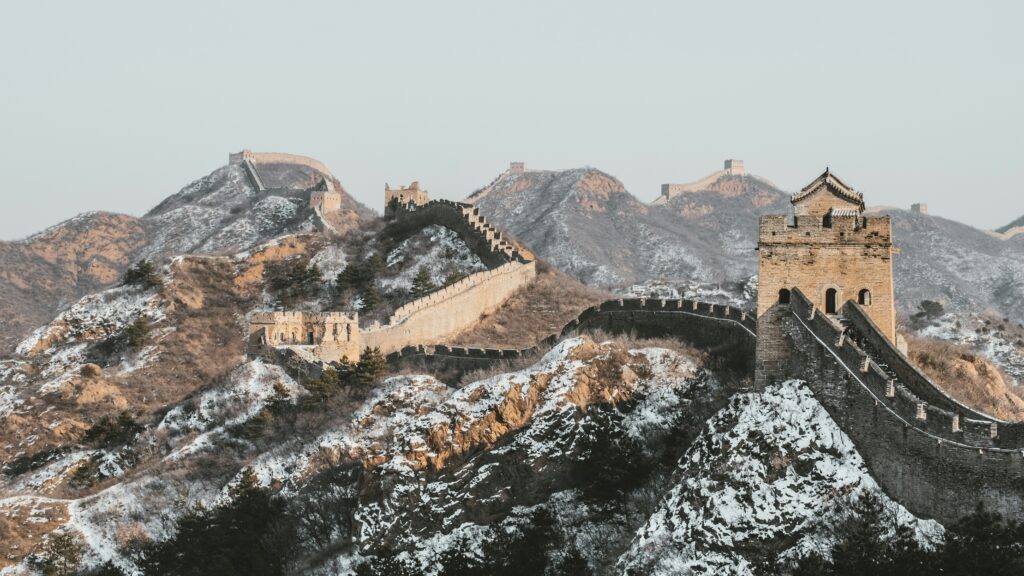
Want to see the Great Wall of China for yourself? We visit the Mutianyu section on Day 4 of our Exploring China small group tour. And to learn more about some of the other fascinating historical places we visit on tour, from the Angkor Wat temple complex in Cambodia to Greece’s living museum of Thessaloniki, click here.
Share your great adventures with us on social media. Tag your pictures with #myodyssey and they may be featured on our website!


By using this website you are agreeing to our Cookie Policy.
