


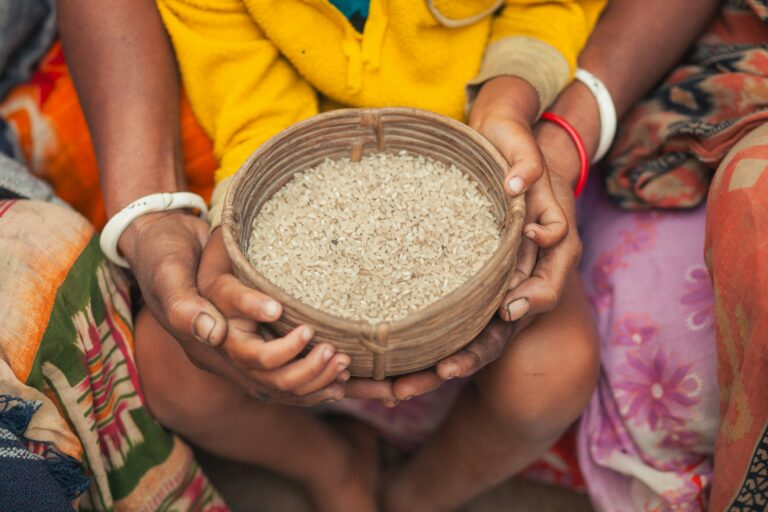
What is rice to you? For billions around the world, the tiny grain represents much more than a side dish. Rice has served as the lifeblood of civilizations scattered across Asia, Africa, the Middle East, and South America for millennia, and continues to feed over half of the world’s population on a daily basis. To these people, rice is a symbol of life, prosperity, abundance, and unity – the foundations their traditions are built upon.
From the communal cultures forged in rice-growing societies to the mortar that helps hold together the Great Wall of China, rice has left its mark in surprising ways across the world. Explore how this humble grain has shaped the destinations we visit on our tours below.
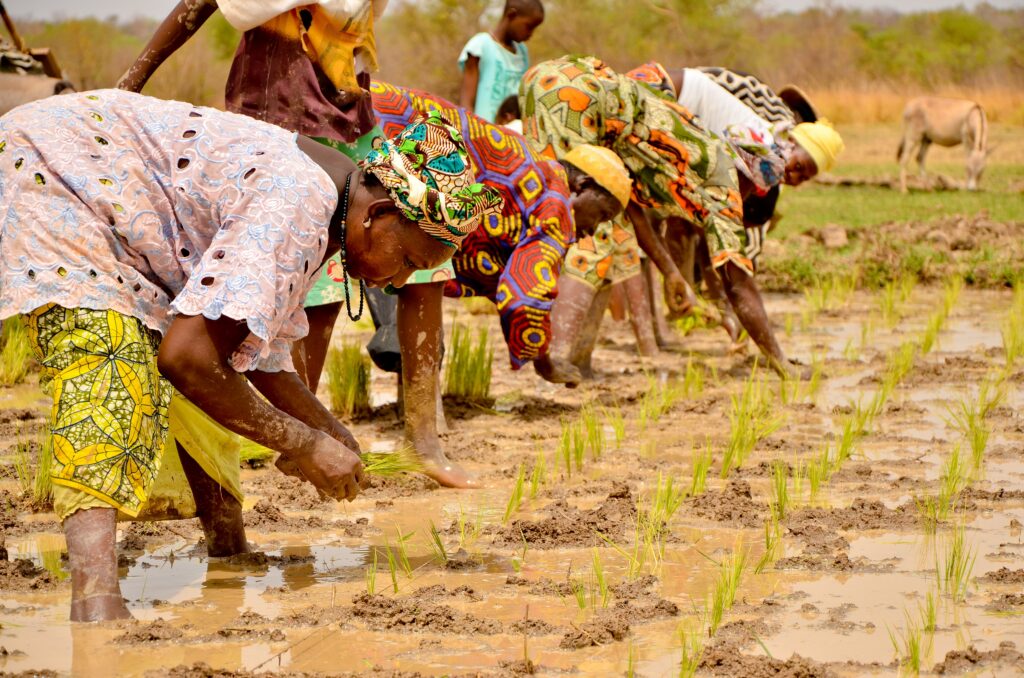
West African families working together to plant rice that will feed them in the following year
The significance of rice as food cannot be understated. Humans have been consuming rice since as early as 8000 BCE and it continues to be a daily staple for more than half the world’s population. From China to India, Japan to Egypt, Vietnam to Peru, Ghana to “the Stans,” and many places between, rice serves as a foundational ingredient in local cuisines. In particular, it is one of the most life-giving foods in Asia and Africa, where it provides up to half of the daily caloric needs for billions of people.
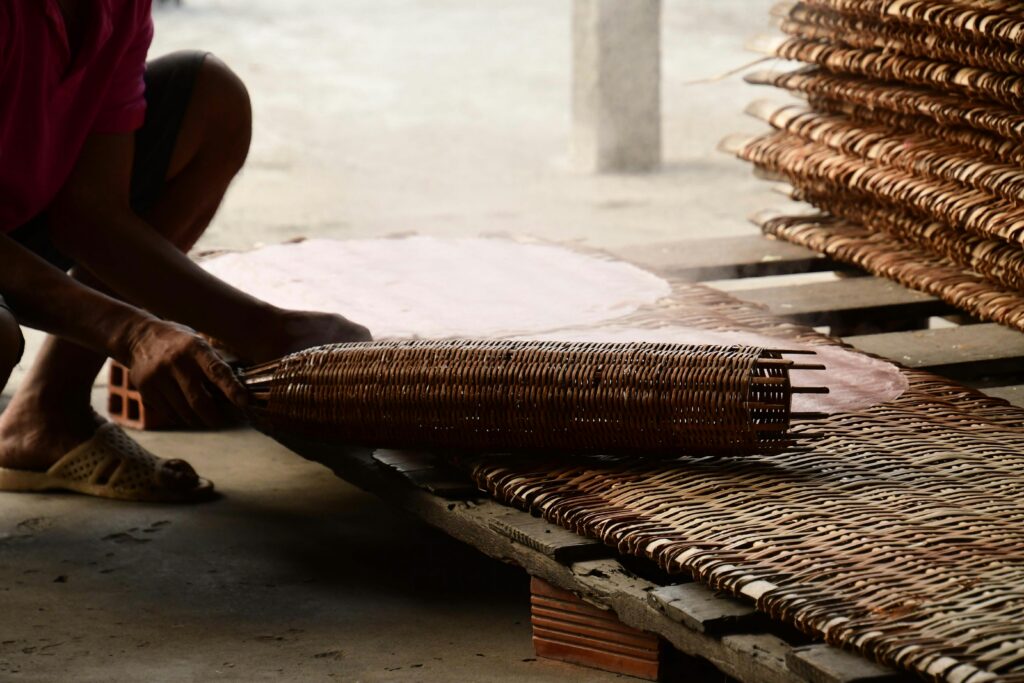
In Vietnam, rice paper is made by mixing a thin rice-and-water slurry, steaming a small amount on a cloth stretched over boiling water, and then drying the resulting sheets on bamboo racks.
If you’ve ever put an electronic device in uncooked rice to dry it out, created a makeshift heating pad by warming up a rice-filled sock in the microwave, or added rice to your salt shaker to prevent clumps, then you already know how useful this grain can be beyond cooking.
Historically, rice has served even greater purposes than these. Rice grains and husks have been used to make paper, textiles, skincare remedies, woven goods, medicine, fuel, and more. In fact, rice mortar – a mix of sticky rice pudding and slaked lime – famously holds together parts of the Great Wall of China, outperforming even modern cement mortar.

Indian brides and grooms playfully shower each other with saffron- and turmeric-coated rice, representing their happiness and wish for prosperity in their marriage.
In many cultures, rice represents life, fertility, prosperity, and community, and cultural traditions honoring this association abound the world over.
For example, many are familiar with the practice of throwing rice at weddings, but few know the tradition has roots in Hinduism; in India, rice tossing represents wishes for abundance and good fortune upon the bride and groom, or it can be used to “feed” evil spirits in an attempt to keep them away from the newlyweds.
Buddhism also treasures the life-giving qualities of rice. In many places throughout Laos, saffron-robed monks mark every sunrise by walking silently through the streets, accepting offerings of sticky rice from fellow Buddhists. (You can even participate in this sacred act on our Southeast Asia Odyssey tour.)
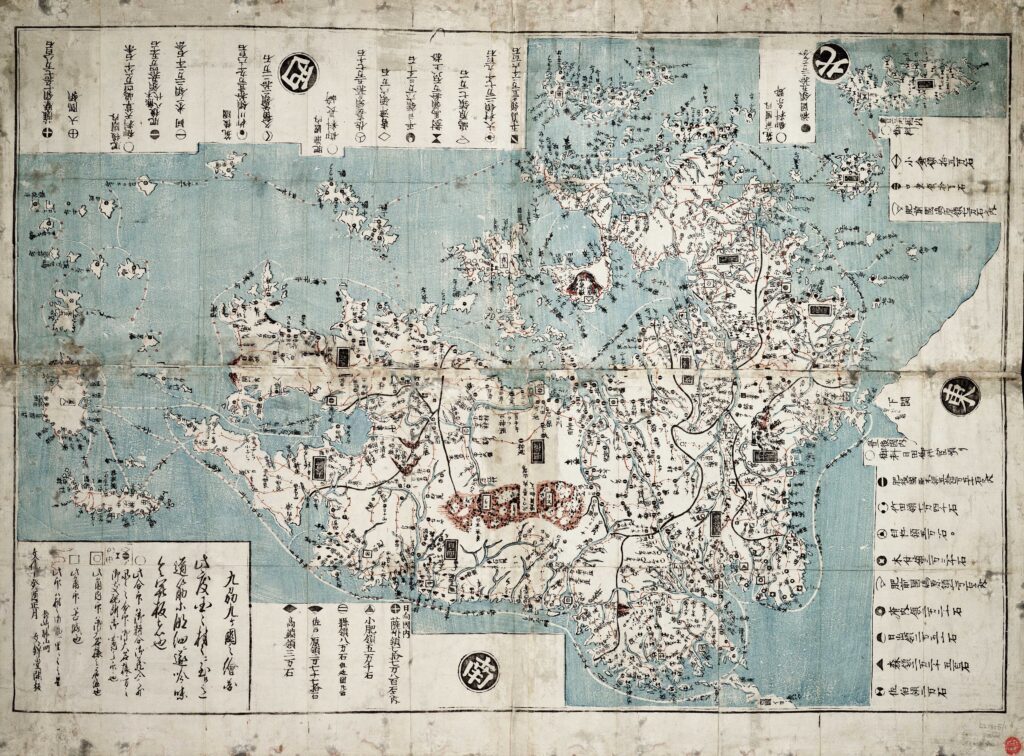
This Japanese map from 1814 details the volume of rice production within the domains of different lords, as rice was the primary measure of wealth in feudal Japan.
Historically, due to rice’s status as a universally necessary staple, it often held more value than traditional forms of money. In feudal Japan, samurais were paid for their services in rice, and lords used rice to pay taxes to the shogun. Korea also mandated using rice for tax payments during the 1600s, and in the pre-colonial Philippines, it acted as the primary currency for trade, taxes, dowries, and more.
The crop also measured the wealth of feudal lords in Japan via the koku (equivalent to about 48 gallons of rice, which was considered the amount needed to feed a person for one year). Once a lord’s domain produced at least 10,000 koku, they were deemed part of the powerful and influential daimyō class.
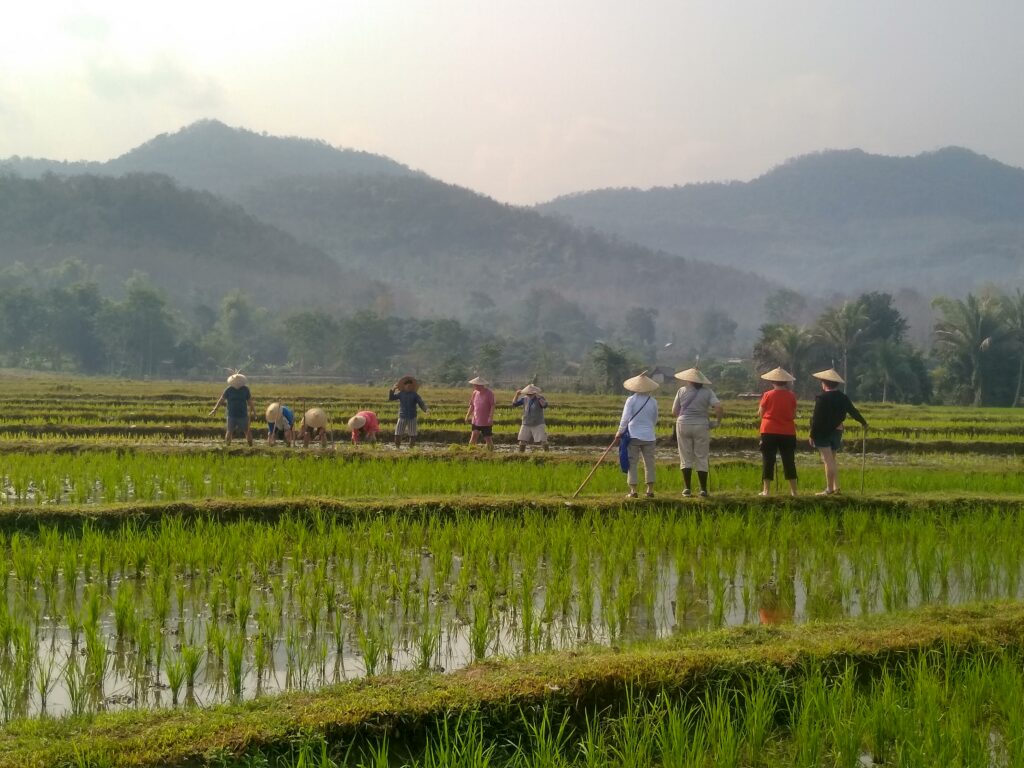
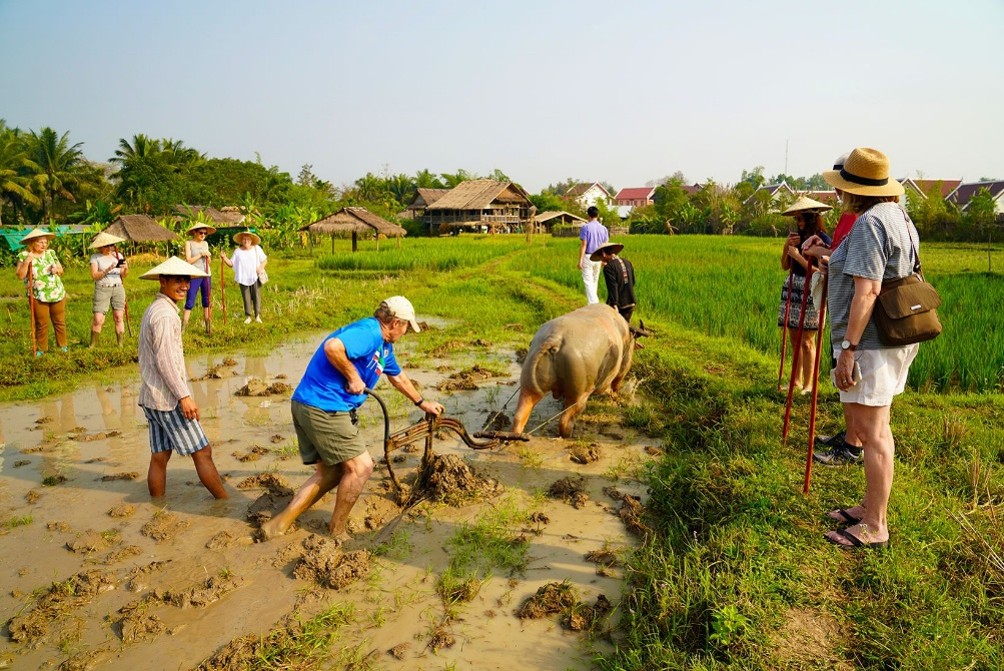
In these two on-tour photos, Odysseys guests are helping out at a communal rice farm in Luang Prabang, Laos, on our Southeast Asia Odyssey tour.
Among its many other achievements, rice may have even played a large part in developing the cultural and social differences between collectivist-centered Eastern Asia and the individualistic West.
It is difficult to farm rice independently. Between maintaining and financing intricate irrigation systems, timing the flooding and draining of paddies, and coordinating labor-intensive and time-sensitive planting and harvesting tasks, it becomes clear why cooperation is necessary. Due to this, psychologists postulate that regions historically dependent on rice farming cultivate more community-focused cultures compared to wheat-growing regions – a hypothesis known simply as the “rice theory.”
We get an inside look at the collaborative nature of rice farming on our Southeast Asia Odyssey tour when we try our hand at tending paddies at a communal rice farm (pictured above).
To dive deeper into the history, culture, and cuisine of destinations around the world, explore our blog for a wealth of history dives, insider’s guides, guest experiences, and so much more. And, if these types of cultural exchanges pique your travel interest, please contact us or submit an online reservation request and we’d be delighted to welcome you on one of our small group tours.
Share your great adventures with us on social media. Tag your pictures with #myodyssey and they may be featured on our website!


By using this website you are agreeing to our Cookie Policy.
